There’s no single way to publish a book successfully. The right publishing approach depends on your goals, timeline, genre, and how much professional support you want along the way.
At The Paper House, we help authors publish with intention. That means providing expert editorial guidance, professional book design, clear contracts, and a structured publishing plan, so your book enters the market with quality, credibility, and confidence behind it.
We offer two publishing pathways: Self Publishing for authors who want full control, and Hybrid Publishing for those seeking a collaborative, full-service approach. Both are author-owned, professionally executed, and designed to help your book succeed, no matter the level of support you choose.
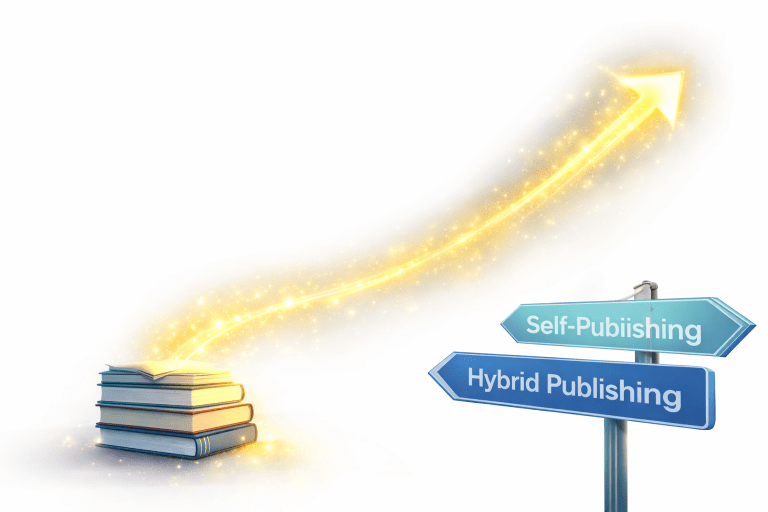
A publishing pathway is the complete roadmap your book follows from manuscript to market. It includes the publishing model you choose, the level of services included, your timeline, the production process, and what happens after the book goes live.
For many authors, publishing decisions can feel confusing because different companies use different terms—often without clearly explaining what’s included. At The Paper House, we simplify the experience: clear service tiers, honest expectations, and a plan you can understand.
A complete publishing pathway typically includes:
Editorial development and manuscript refinement
Cover design + interior formatting
Publishing setup (ISBNs, imprint listing, metadata optimization)
Distribution preparation (online retailers + wholesale channels)
Launch guidance and long-term visibility strategy
Publishing isn’t just about uploading a file. The publishing model you choose affects:
your rights and ownership
your costs and timeline
your distribution potential
your credibility in the market
your long-term ability to promote and scale sales
A professional publishing pathway protects your work and positions your book to succeed. When publishing is done poorly, authors often experience:
weak covers and formatting that make the book look self-made
vague timelines and mismanaged production
incorrect metadata that kills discoverability
low-quality distribution setups that prevent bookstore ordering
marketing that’s “generic” and doesn’t convert
At The Paper House, our goal is to prevent those mistakes—and build your book to compete.
We serve authors in two ways:
Self Publishing: professional publishing support with full independence
Hybrid Publishing: a full-service partnership for authors seeking deeper strategy and execution
Both options are designed to be editorially led, author-owned, and professionally delivered.
Self publishing is ideal for authors who want to publish independently while still receiving professional quality control. This pathway is best for writers who value ownership and flexibility, but want their book to look and read like it belongs in today’s market.
This publishing model allows you to maintain:
your full creative control
your production schedule
your book rights and royalties
…but without sacrificing quality.
What Self Publishing is NOT:
It’s not “DIY publishing.” Many authors use self publishing successfully—but the difference between a book that sells and a book that disappears is almost always professional editing, design, formatting, metadata, and packaging.
Self Publishing is best for:
authors who want to invest strategically and keep control
authors who already have a platform or audience
authors publishing a first book and wanting a clean, professional launch
authors wanting to publish quickly without long-term publishing partnerships
Common services included in Self Publishing support:
manuscript review + editorial recommendation
copyediting / proofreading (as needed)
cover design built to genre standards
professional interior layout for print + ebook
ISBN and barcode guidance (if applicable)
retailer-ready file production
guidance for distribution setup (Amazon + major retailers)
Hybrid publishing is ideal for authors who want to publish independently, but with the structure and strategic depth of a traditional publishing-style team.
The hybrid pathway includes a more robust level of support. It’s designed for authors who want:
hands-on publishing management
ongoing editorial involvement
launch planning
a stronger marketing and visibility framework
Hybrid publishing is a partnership—and the right hybrid publisher should feel like a true publishing team, not a vendor.
Hybrid Publishing is best for:
authors who want support managing the entire publishing journey
authors seeking high-end editorial + production standards
authors who want post-launch strategy and long-term visibility
authors building a series, brand, or platform over time
Hybrid projects are typically built around:
deeper editorial collaboration
professional team support across multiple publishing phases
publishing process oversight and quality control
launch strategy and visibility support after publication
02
Hybrid Publishing focuses on:
producing a professional book and positioning it for traction
deeper editorial support and project oversight
long-term strategy for distribution and visibility
marketing guidance aligned with book goals and genre
Both publishing pathways produce a professionally published book. The main difference is how your project is supported after production begins.
Self Publishing = independent publishing with professional execution
Hybrid Publishing = independent publishing with full strategic partnership
Here’s what typically separates them:
01
Self Publishing focuses on:
producing a professional book
ensuring your files are retail-ready
delivering strong design + editorial execution
publishing efficiently and affordably
Publishing timelines depend on your starting point. A polished manuscript moves faster. A manuscript still in development requires more editorial time—which is always worth it.
Typical publishing timeline ranges:
Self Publishing: 8–16 weeks depending on editing + design scope
Hybrid Publishing: 12–24+ weeks depending on developmental editing, revisions, and launch planning
In both pathways, you’ll receive a clear timeline and milestone structure so you always know what’s next.
Many publishing companies are production-first. They focus on completing tasks.
We’re different.
The Paper House is built on an editorial foundation—because in our experience, the quality of the book affects everything else, including:
reviews
reader retention
word-of-mouth
sales performance
author credibility
That’s why our publishing pathways are designed to protect quality at every stage—especially before launch.
There is no “better” option—only the one that aligns with your publishing vision.
The right choice depends on:
Our role is to provide clarity so you can move forward with confidence.
If you’re unsure whether you need Self Publishing or Hybrid Publishing support, we can help you choose. Our goal is to match authors to the right level of services—not oversell.
Take the Publishing Quiz or submit your manuscript for review, and we’ll guide you toward the best publishing pathway for your goals, genre, and timeline.